
BLOG | The Building Safety Act: Why the Accuracy and Quality of Product Information is Key

The Building Safety Act (BSA) includes a number of groundbreaking reforms and places a significant emphasis on the management and transfer of safety-critical information throughout a building’s lifecycle. With product information and legislation so critical when specification decisions are made, how can we as a construction product manufacturer support specifiers, architects and contractors to make informed safe decisions?

The impact of the BSA

For the masonry sector, the Act has raised the bar on product conformity, traceability and documentation.  It’s no longer simply a case of supplying a ‘compliant’ product. Product suppliers need to provide clear evidence of conformity to the relevant standards whether that’s BS EN 845-1/2 for masonry components or BS EN 1090 where steel execution applies. Declaration of Performance and CE or UKCA marking where applicable, test reports, and batch/serial traceability are essential to feed the golden thread of information.

With duty holders required to identify who is accountable, suppliers can expect more detailed contract clauses, warranties and requests for indemnities. Failure to provide full evidence may delay approvals or expose suppliers to claims if a product is later implicated in a safety issue. On top of that, installers’ competence and proof of correct installation (photos, sign-offs, inspection records) are required for the golden thread and to satisfy gateway and the statutory change-control process. Manufacturers must provide clear installation instructions, training and certification routes.


Implications for specifiers

For architect and contractors, the BSA means stricter specification and design evidence is required. Architects must specify proven systems (to the right standards, testing etc), document design decisions to feed the golden thread of information and must justify bespoke specification with risk assessments and testing evidence.

Duty holders, including principal designers and contractors, must meet competency expectations. Work on high-risk buildings (HRBs) is subject to Gateway 1–3 checks which means that documentation gaps such as missing product test certificates or lack of installation records can delay or stop work. Contractors must build the evidence trail into their programme and commercial risk management, ensuring that product IDs, certificates, test results, inspection photos, commissioning records and O&M information are captured and handed over as part of the permanent safety record for the building.


How IG Masonry Support has adapted to the BSA

All product information has or is in the process of being verified by the CCPI (Code for Construction Product Information). This is critical for duty holders as it clearly identifies that the product information is accurate and unambiguous. Technical Data Sheets and Installation Guides have also been updated to fully align with the Building Safety Act requirements.

We have also been awarded certification to BS EN ISO 19650-2:2018, the globally recognised standard for building information management (BIM) over the life-cycle of built assets. This supports a robust information management framework for traceability, digital record-keeping and structured workflows all of which are critical for the golden thread requirements.

We continue to lead the way with new product certification for our products including recently becoming the first masonry support manufacturer to achieve BBA for a masonry support system (Welded Masonry Support). This is key for IG as we pride ourselves in going above and beyond minimum standards and ensure our products meet the highest standards for safety and quality.


Supporting specifiers every step of the way 

Specifiers face a challenging environment under the BSA and our role is to make it easier for them to make informed decisions.  We provide:

  • Detailed CCPI-verified technical data sheets, installation instructions and testing data for all of our products
  • Third-party certified products to give specifiers confidence that a system has been independently assessed for intended use.
  • A Building Information Modelling (BIM) and information management infrastructure aligned to BS EN ISO 19650-2:2018.
  • A free scheduling and specification service from our in-house engineers
  • Transparency around sustainability including EPDs for all our products, support responsible specification and environmental compliance.
  • A CPD programme targeting architects, engineers and specifiers to provide deeper insight into our products.
  • Full in-house manufacturing at our factory in South Derbyshire, certified to BS EN ISO 9001:2015, BS EN ISO 14001:2015, EN 1090-1:2009, guaranteeing consistent highest quality products.


A new era of transparency

Every project we have tackled to date under the BSA has had different requirements. By sharing learnings from previous successful submissions, we are able to support duty holders through the gateway process, helping them understand what information is required and how to structure it.

The Building Safety Act has dramatically changed the construction landscape  but by ensuring the accuracy and quality of our product information, and supporting specifiers and contractors throughout the entire project lifecycle, we are committed to playing our part in delivering a safer built environment.

 

GUEST BLOG | Building Confidence in Fire Safe High-Rise Design

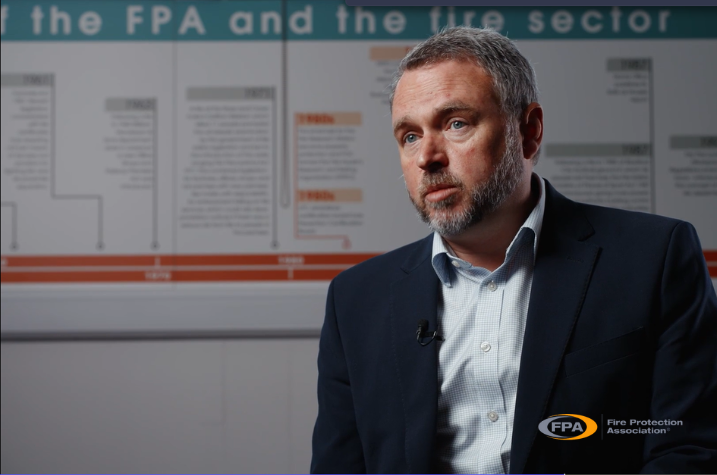
Gavin Dunn, Chief Executive of the UK Fire Protection Association (FPA)

Recent changes to building regulations have brought a much greater emphasis on fire safety across all types of buildings, but particularly for high-rise residential buildings. The sector is now taking a more risk-averse approach to material specification and system design, which means the products we choose, the way we use them, and the way we evidence their performance are under far greater scrutiny than ever before.

The Fire Protection Association (FPA) is a non-profit organisation, owned by the UK insurance industry and the National Fire Chiefs Council. Our sole purpose is to help industry, construction, and property owners reduce risks within their portfolios, both from fire and wider resilience issues. We see first-hand how changes in regulation, oversight, and market expectations are reshaping how the industry designs, builds, and maintains high-rise buildings.

New regulatory framework

The Building Safety Act, the creation of the Building Safety Regulator, and the requirement for the “golden thread” of information have fundamentally changed the regime for higher-risk residential buildings. These projects now follow a formal gateway process. Gateways 1,2 and 3 are essentially planning, construction and before occupation with regulator sign-off being required at each stage before the project can progress.

For those involved in design and specification, this means that products must have proven performance and are tested and certified to relevant standards for their intended use. It’s fundamental that any change such as using products differently from their original specification or in combination with other products that weren’t originally envisioned, the information is reported back to the design team who must then check that these products are still safe, appropriate and compliant. Additional checks such as engineering reviews or new fire tests are essential to confirm they remain safe and compliant. It might also need regulator sign off as well.

The shift to non-combustible materials

Following Grenfell Tower and other fires internationally, the specification of combustible materials, particularly in facade systems, has come under intense scrutiny. There has been a significant shift in market expectations, with insurers, investors, and end users showing a strong preference for non-combustible materials in high-rise buildings.

This change is about more than just meeting regulatory requirements. It is also about reducing reputational risk, protecting public trust, and ensuring the long-term safety of buildings. Non-combustible materials offer the most straightforward route to achieving these goals, giving greater confidence in both compliance and performance.

Testing, verification, and installation

As an industry, we must move beyond simply selecting compliant products. Correct usage and installation are equally critical. Too often, the right products are specified but installed incorrectly, and the data shows that poor installation is currently our biggest failure point.

That is why additional verification steps are so important. Increasingly, products are being tested not just for certification, but for wider or combined uses. This data provides fire engineers with the evidence they need to make sound judgements. In parallel, inspection processes on site must confirm that products are installed exactly as intended.

The importance of the golden thread

The products chosen, how they are used and how they are installed must be documented as part of the golden thread of information. It becomes the single source of truth when it comes to a building. This provides a detailed and accessible record for future owners and operators, ensuring they have the knowledge needed to make safe, informed decisions about maintenance or alterations. Without this transparency, public confidence in building safety will remain fragile.

Looking ahead

The initial industry response to the new regulatory regime has been to specify non-combustible materials wherever possible, and this has been the right approach to rebuild trust. Over time, as testing regimes, certification processes, and regulatory oversight continue to strengthen, we may reach a point where certain combustible materials can be reintroduced in very controlled and well-evidenced ways.

Until then, prioritising proven, non-combustible systems remains the most risk-averse and publicly acceptable choice. Manufacturers such as IG Masonry Support play a vital role in this, providing A1-rated, fully tested solutions and the technical expertise to ensure they are specified and installed correctly.

The challenge now is to maintain our focus on what matters most: delivering buildings that perform in the way society needs them to perform. It is really important that we re-establish public trust and we build buildings that perform in the way society needs them to perform. That means creating buildings that are healthy, energy efficient and great places to live, while also giving people the peace of mind that they are safe and secure when things go wrong.


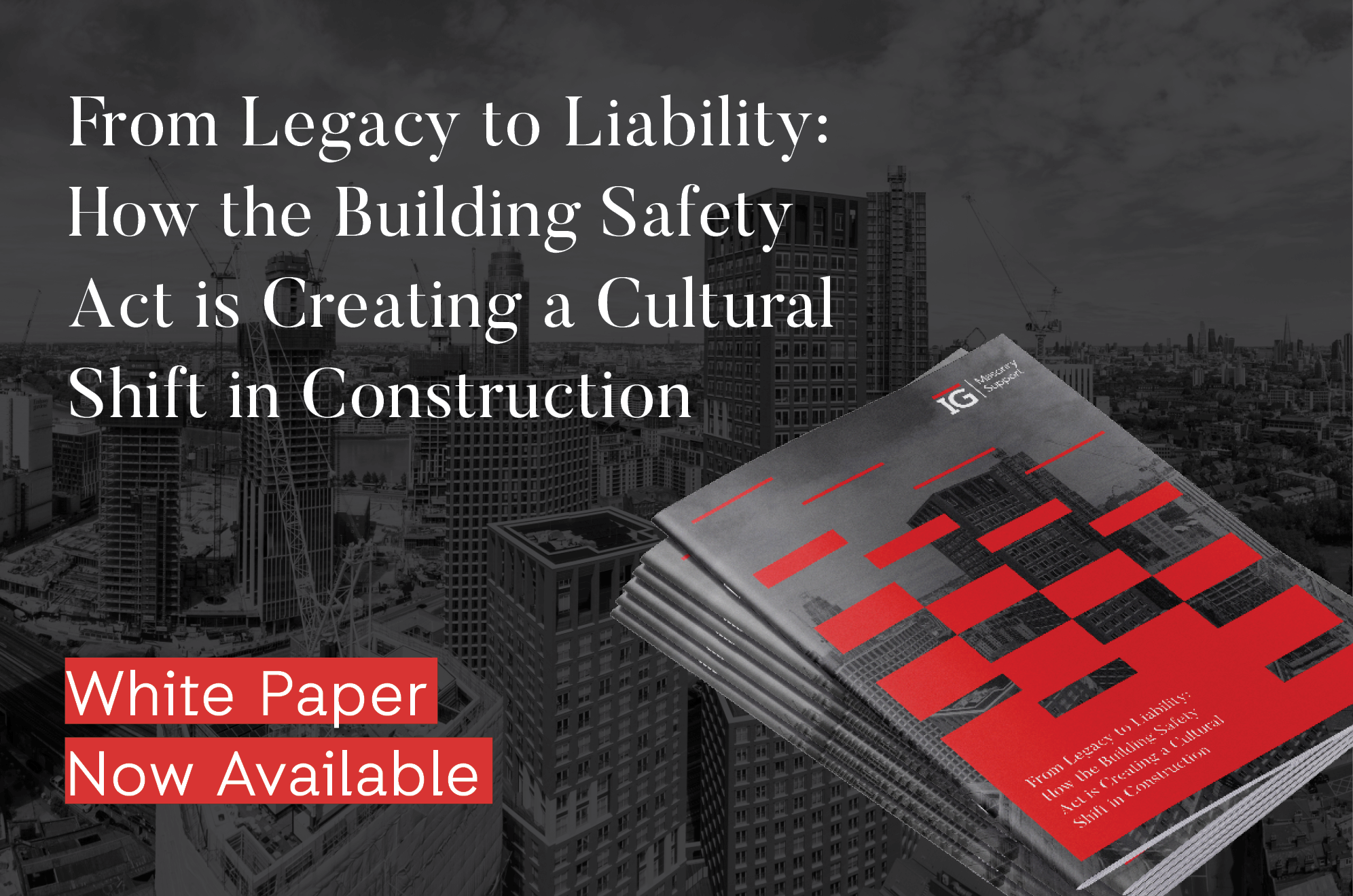
WHITE PAPER | “From Legacy to Liability” – Exploring the Cultural Shift Driven by the Building Safety Act

IG Masonry Support has released a powerful new White Paper titled “From Legacy to Liability: How the Building Safety Act is Creating a Cultural Shift in Construction.” The publication brings together leading voices from across the construction industry to examine how the Building Safety Act (BSA) is reshaping standards, accountability, and culture across the built environment.

Born from the lessons of the Grenfell Tower tragedy and the recommendations of the Hackitt Report, the Building Safety Act represents one of the most significant transformations in UK construction for decades. IG Masonry Support’s White Paper explores how organisations are adapting to the new regime, including the challenges, opportunities, and the urgent need for collaboration as the industry adjusts to heightened scrutiny and accountability

The paper distils insights from an exclusive roundtable we hosted as part of our ‘Sleep Like a Baby’ campaign, which champions compliance and certification in construction. Bringing together key figures from across the sector – including representatives from CABE, BSI, McAleer & Rushe, Lee Marley Group, Aros Architects, Hoare Lea, and Broadway Malyan – the discussion explored the Building Safety Act’s real-world impact, from project approval delays to evolving competence frameworks, digital record-keeping, and a growing culture of transparency and assurance.

“The Building Safety Act is driving a fundamental change in how we approach design and construction,” said Andy Neal, Managing Director of IG Masonry Support. “It’s forcing the industry to move from a fragmented, product-by-product mindset to one built on competence, accountability, and safety. This White Paper captures that moment of transition – the challenges, yes, but also the progress being made.”

The publication concludes that while the Act’s implementation has been complex, it is ultimately driving positive long-term change, embedding safety, competence, and integrity at the heart of construction practice.

The White Paper is now available to download.

Icon DownloadDownload White Paper

GUEST BLOG | Building Safer Outcomes, Not Just Better Buildings

By Richard Harral, Chief Executive Officer at Chartered Association of Building Engineers (CABE)

The drive to deliver safer buildings has never been more important, or more urgent. At Chartered Association of Building Engineers (CABE) we are a multidisciplinary Professional Engineering Institute with a Royal Charter.

Our members work across the full project lifecycle, and we are an active and engaged community, deeply committed to improving the built environment, and, above all, to making buildings safer for the people who use them.

There’s a growing consensus in the industry as to where we need to end up in terms of safety. We need to ensure that everyone involved in designing, specifying, constructing and maintaining buildings is assessed for competence and that there is a clearly defined understanding what they can and cannot do safely. The truth is our industry has not always done this well. In fact, competence has often been managed in a patchy, inconsistent way, or sometimes not at all.

It is no longer acceptable to claim that a person, system or product can be trusted simply because we believe that is the case. In particular, third-party testing of products becomes fundamental, not only in enabling designers to have confidence in what they are specifying, but also to help rebuild trust in a broader sense; that the products are going to deliver the safe outcomes people quite rightly expect.

This means that we have to move beyond minimum standards of compliance. It’s critical that product and system manufacturers and everyone in the industry starts to look at how they deliver the right outcome, rather than simply box ticking to secure sign off from building control or any other authority.

This is why the new competence frameworks that are being developed by the Industry Competence Steering Group (ICSG) and BSI, and the new ways of applying them, are so valuable. One good example of these new standards is  BS 8670-2, a companion to BS 8670-1, which is the core criteria for building safety and competence frameworks. While Part One sets our general principals, Part Two focuses on construction products and sets out what competencies people need have to be able to specify, use, install, maintain and manage construction products to ensure the right outcomes.

The shift towards competency based systems will help continuously upskill our industry. It will encourage people to seek out learning that’s directly relevant and applicable and focuses on maintaining competence throughout their career. In relation to construction products, this will be vital in helping everyone make better decisions throughout the life of a building.

The Building Safety Act (2022) has changed people’s accountabilities; and the timescales in which they can be held to account. This means that in addition to focusing on safe outcomes, everyone has to be more mindful about how they can defend their decisions if something does go wrong.

The advice we give is simple: when in doubt, apply the precautionary principle. What does that mean in practice? It means utilising systems and approaches that you know, understand and trust. It means adding extra levels of mitigation to ensure higher degrees of certainty that the systems and products you are using are going to perform as expected, throughout the lifecycle of the building.

It’s important that construction professionals, building users and the residents who they serve have peace of mind and confidence that the right outcomes are being achieved in a context where buildings are becoming increasingly complex, we are asking them to perform to higher standards over time, both in terms of safety and energy efficiency. The only way that we are going to achieve this peace of mind is if we think differently about how we design and specify.

That means taking a holistic view of building performance. We have to consider how each element will perform in relation to and in combination with others, rather than looking at a single product’s conformity. We must also look at additional levels of mitigation where we have any concerns, or doubts, about the overall performance of the building when it’s actually in use.

This definitely means leaning to a greater extent on third-party certification and testing of both products and systems – and increasing the number of systems that are tested at scale. It may also mean narrowing the supply chain we use so that we work with products and systems on a more frequent basis. We must become more familiar and confident in the way that they perform and in the way that we need to use them.

This is where manufacturers have a critical role to play, by providing tested, well-documented solutions and the technical support that helps designers and contractors specify with confidence. IG Masonry Support clearly understand this imperative, and it is great to see the investment they are making in helping delivery better quality and safer outcomes.

At CABE, we are committed to working with proactive professionals to, help build a safe, sustainable and equitable built environment. This is important to our members, who are professionals with a real passion for the work that they do. It’s also fundamental to ensuring that people are safe, and feel safe in the homes and workplaces that matter to them.


BLOG | The Importance of Sustainability in Masonry Support Manufacturing


On our journey to a more sustainable built environment, building product manufacturers must look at both the now and the future role they play. Specifiers need to think about the materials used in buildings and their environmental impact throughout their lifecycle. From manufacturing processes to material specification, these choices matter. At IG Masonry Support, this challenge has become a driving force in how our company operates and why it is committed to improving efficiencies and driving product innovation which will enable the design and construction of more sustainable buildings.

Our sustainability journey began in 2020 with the goal of delivering our B.O.S.S A1 (Brick on Soffit System) as a Carbon Natural solution. Soon after, we assessed our entire company footprint. Today, it’s not just expected but it’s more important than ever to measure the environmental impact of our manufacturing processes, materials, and supply chain. What started as a series of small operational improvements quickly evolved into a long-term strategy that has reshaped our thinking across all departments.

Our leadership team and employees are fully aware of the challenges posed by climate change and environmental degradation. That’s why we made a collective decision to commit to annual Carbon Footprint reporting and to respond proactively to our findings. In 2021, IG Masonry Support became the first masonry support manufacturer in the UK to achieve Carbon Neutral status. While we recognise that credible carbon credit schemes are not a long-term solution for achieving Net Zero, we are seeing a year-on-year reduction in the emissions we need to offset. For us, this marks significant progress. We’re proud to continue investing in responsible initiatives, including renewable energy technologies, while working to reduce our operational impact.

Reducing our carbon footprint doesn’t happen overnight. It requires sustained commitment, targeted investment, and strategic upgrades, all intentionally aimed at lowering emissions. This has included significant improvements at our manufacturing sites in Swadlincote and Cookstown, such as transitioning to 100% renewable energy tariffs, adopting electric-powered equipment, and enhancing our manufacturing technologies. We’ve replaced diesel forklifts with electric alternatives, expanded our recycling facilities, and ensured that zero waste is sent to landfill, a critical benchmark in sustainable manufacturing.

B.O.S.S A1

One of the defining moments in our sustainability journey was the development of B.O.S.S. A1. Our Brick on Soffit System not only meets but exceeds the latest A1 fire regulations. Designed to deliver superior aesthetics and structural integrity, B.O.S.S. A1 gives the appearance of unsupported brickwork while significantly simplifying installation.

What makes this product truly stand out is its environmental profile. It became the first carbon neutral product of its kind on the market, combining functionality, compliance, and sustainability. Achieving this milestone gave us the confidence and motivation to take our ambitions even further.

The certification of B.O.S.S. A1 was just the beginning. It demonstrated that sustainability can be designed into a product from the outset and that environmental performance doesn’t have to come at the expense of structural or aesthetic quality.

Science Based Targets

To ensure that our sustainability strategy was both robust and achievable, we engaged with Carbon Footprint Ltd. With their guidance we have developed measurable targets to align with the Science Based Targets initiative (SBTi) methodology, a globally recognised framework that helps companies set and achieve ambitious emissions reduction targets.

Through this framework, we identified and analysed our Scope 1, 2, and 3 emissions, giving us a comprehensive understanding of our carbon footprint. This transparency allowed us to identify immediate actions in areas like energy use and transport, while also highlighting the importance of collaboration with suppliers and partners to drive reductions across the supply chain. We are now on track to meet the 1.5°C Paris Agreement target, joining thousands of companies worldwide in tackling climate change.

None of what we have achieved would be possible without the dedication of our entire team. Sustainability is embedded within the culture at IG Masonry Support. From design to production, every individual plays a role in driving our environmental progress. Backed by ISO 9001, ISO 14001, and BBA certifications, our commitment to excellence is clear.

Looking ahead, our goal is to continue leading the way in sustainable product manufacturing and bringing innovative, responsible solutions to market.

GUEST BLOG | Building Safety Act: Why Competence, Testing and Trust Are Non-Negotiable

An interview with Richard Harral, Chief Executive of the Chartered Association of Building Engineers (CABE)

As the construction industry continues its journey towards safer, more accountable practices, the message from regulatory bodies and professional institutes is increasingly clear: compliance alone is no longer enough.

In a recent conversation with IG Masonry Support, Richard Harral, Chief Executive of the Chartered Association of Building Engineers (CABE), shared his perspective on how the industry must evolve to meet the expectations of the Building Safety Act — and why this shift demands a fundamental rethinking of how we define and demonstrate competence.

CABE, a global professional engineering body, is championing a culture of lifelong learning and accountability. With the introduction of frameworks like BS 8670-1 and 8670-2, there’s now a sharper focus on the specific skills and understanding required to correctly specify, install, and manage construction products — from brick support systems to full envelope solutions.

Richard also highlights the critical importance of manufacturers in this process. By providing independently tested and clearly documented solutions, manufacturers help close the trust gap and enable designers, specifiers, and contractors to make confident, compliant decisions.

At IG Masonry Support, we’re proud to play our part. From our TITAN and B.O.S.S. products to our technical support and CPD offerings, we help ensure that performance, testing, and compliance are not afterthoughts — but core to specification decisions from the outset. We’re proud to be part of a safer, more competent built environment.

Watch the full interview with Richard Harral to explore how safety, trust, and responsibility are reshaping the future of construction.

NEWS | CCPI Assessed Mark Achieved for Folded Angle

IG Masonry Support has earned the Code for Construction Product Information (CCPI) mark for our Folded Angle product.

The CCPI, developed by the Construction Product Association (CPA) following Dame Judith Hackitt’s review of Building Regulations and Fire Safety, establishes an 11-clause set of requirements designed to raise standards in product information management and marketing within the construction manufacturing sector.

Achieving CCPI conformance enhances customer trust and helps to give greater confidence that product information is conforming with the CCPI. This is increasingly vital for specifiers and buyers seeking reliable product performance information and supporting some of their needs in relation to compliance with the Building Safety Act.

The CCPI Assessed Status for Folded Angle product information is valid for two years, demonstrating our commitment to ongoing improvement and proactive advancement of production information and marketing standards.

Securing the CCPI Assessed Mark for all of our masonry support solutions reaffirms our commitment to providing reliable, transparent, and assessed product information to the industry, said Kyle Alexander, General Manager of IG Masonry Support. “This recognition reflects our ongoing drive to empower specifiers with trusted data and reinforces our role in pushing the boundaries of best practice across construction. It’s more than an achievement—it’s a long-term pledge to integrity and innovation. We are continuing to work on achieving the CCPI Assessed Mark for the product information for the remainder of our product ranges, using the latest assessment process.”

The CCPI mark for Folded Angle adds to our extensive portfolio of manufacturing and product certifications, further solidifying our company’s compliance and reputation as a trusted partner in the construction industry.

BLOG | A safer future: unravelling the Golden Thread

In 2018, Dame Judith Hackett championed the concept of the ‘Golden Thread’ of information to preserve a building’s original design intent as part of her review: Building a Safer Future. Now enshrined in the Building Safety Act, this Golden Thread of information is about transparency and accountability throughout the supply chain. With product information having gained increased significance, Kyle Alexander, Project and Engineering Manager of IG Masonry Support explores the implications for masonry support solutions and how this concept applies to various stages of construction, from initial design and product specification to construction methods and regulatory compliance.

The Building Safety Act has far-reaching implications across all stages and elements of a project. It covers design, product specification, construction methods, regulatory compliance, environmental considerations, quality control and safety measures.  As part of this is a crucial new compliance element: the “Golden Thread” which was devised as a way of ensuring that anyone involved on a project has the right information, or ‘single source of truth’, in order to understand the building and the steps needed to keep both the building and the occupants safe both now and in the future.

Specific to a building, the Golden Thread will hold the information that those responsible and accountable for the building require, and prove that the completed building and later work meets the requirements of the relevant Building Regulations. Having the Golden Thread means that the people responsible for the building and other relevant parties such as contractors will have reliable, accurate and easily accessible up to date information.

By bringing all the information together in one place, this core record-keeping process tracks a building’s design, construction, and operation. It requires managing, documenting, and making information about the building accessible to ensure understanding and safety. This information management ensures accuracy, currency, security, clarity, and availability to those who need it.  This will help drive improved accountability.


Commitment to the Golden Thread

With growing scrutiny on product information, manufacturers like IG Masonry Support are increasingly focused on helping stakeholders maintain a reliable and accessible Golden Thread of information. Duty holders, including consultants and contractors, need reliable information about the products they specify and install.

To help those accountable deliver the Golden Thread of information, IG Masonry Support has implemented a multi-faceted approach to meet and exceed the Golden Thread expectations. The company maintains rigorous ISO 9001 Quality Management Systems accreditation through continual assessment of the company’s internal information management system to ensure its robustness.

It also provides comprehensive product information which includes detailed specifications, performance and accreditation data, installation instructions, and maintenance guidelines – all of which are easily accessible on its website and specification platforms. This information is currently under review by the Code for Construction Product Information (CCPI).

Furthermore, the manufacturer meticulously maintains accurate records and documentation, systematically preserving precise technical data, comprehensive certifications, and detailed test reports to support duty holders in establishing and maintaining essential product information throughout a building’s lifecycle.

The company also provides extensive training and educational resources, offering in-depth guidance to specifiers and contractors on the comprehensive installation, appropriate use, and ongoing maintenance of its products. Its robust technical support includes assisting contractors and helping them navigate complex compliance requirements, selecting the right products and integrating them into projects, interpreting intricate technical data, and providing responsive support for any queries or challenges encountered during the construction process.


Culture change

The Golden Thread is about having the right information to ensure safer buildings and more accountable construction practices. By creating a seamless flow of information from design through to construction and operation, it ensures that all stakeholders—from architects to contractors—have access to accurate, up-to-date data that is critical for maintaining safety and compliance.

As the Building Safety Act continues to shape industry standards, product manufacturers such as IG Masonry Support will play a crucial role in supporting this shift. Through its commitment to rigorous information management practices, transparency, and ongoing product support and education, it is helping stakeholders navigate the complexities of building safety and regulatory compliance.

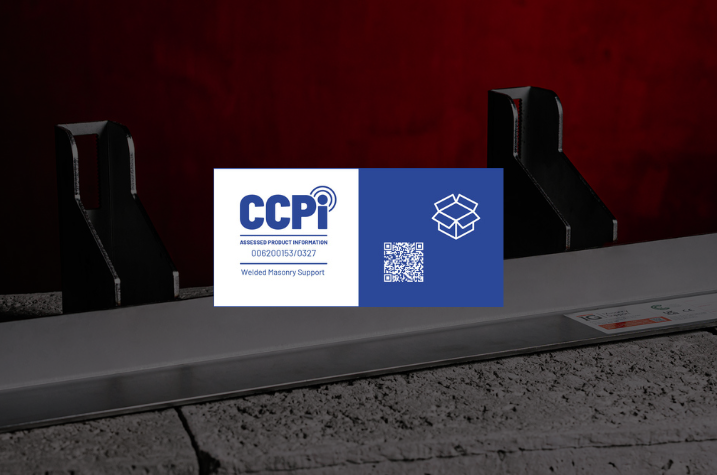
NEWS | CCPI Mark achieved for Welded Masonry Support

IG Masonry Support is delighted to have earned the Code for Construction Product Information (CCPI) mark for our Welded Masonry Support product.

The CCPI, initiated by the Construction Product Association (CPA) following Dame Judith Hackitt’s review of Building Regulations and Fire Safety, establishes an 11-clause set of requirements designed to improve product information management and marketing within the construction manufacturing and supply sector. The CCPI is working to move the industry to a place where product information and marketing is clear, accessible, accurate, up-to-date and unambiguous.

Achieving CCPI conformance provides greater confidence for customers using the product information carrying the CCPI Assessed Status mark.  This is increasingly vital for specifiers and buyers seeking reliable product performance guarantees and compliance with the Building Safety Act.

The CCPI Assessed Status for Welded Masonry Support is valid for two years, demonstrating IG Masonry Support’s commitment to ongoing improvement and proactive advancement of production information and marketing standards.

“Achieving the Code for Construction Product Information (CCPI) mark for our Welded Masonry Support underscores IG Masonry Support’s unwavering commitment to transparency and accuracy in product information,” said Kyle Alexander, General Manager of IG Masonry Support. “We’re proud to demonstrate our dedication to clear, accessible, and up-to-date information, giving specifiers and buyers the confidence they deserve. This two-year assessed status is not just a milestone, but a continuous commitment to raising industry standards and driving positive change.

“A lot of hard work has gone into this process, and we are continuing to work on achieving the CCPI mark for the remainder of our product ranges, using the latest assessment process.”

The CCPI mark for Welded Masonry Support adds to our extensive portfolio of manufacturing and product certifications, further solidifying our compliance and reputation as a trusted partner in the construction industry.

Find out more about our Welded Masonry Support (WMS) product.

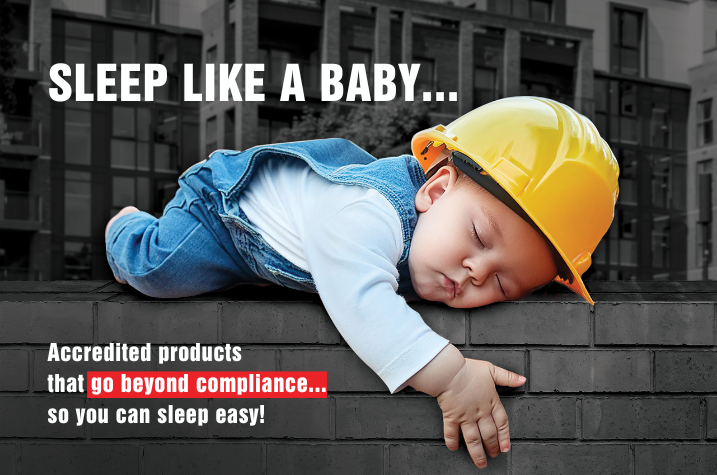
NEWS | ‘Sleep Like A Baby’ campaign launches to champion Building Safety Act compliance

IG Masonry Support is proud to launch our innovative ‘Sleep Like a Baby’ campaign to highlight our company’s unwavering commitment to Building Safety Act compliance, in-house manufacturing excellence and high-quality, accredited products.

Aimed at architects, specifiers and contractors, the campaign showcases our comprehensive approach to quality assurance and safety, backed by numerous industry accreditations and certifications. Operating from our state-of-the-art manufacturing facility in South Derbyshire, our company maintains complete control over production quality through in-house manufacturing processes and rigorous testing protocols.

In a new era of accountability, the campaign cements our reputation and commitment to supporting stakeholders throughout the entire project lifecycle, from initial design and specification through to completion. By maintaining strict control over the manufacturing process and investing in extensive testing and certification, we ensure our masonry support and brick slip products not only meet but exceed current building regulations and safety standards.

Key features that set us apart include:

Commenting on the launch of the campaign, Andy Neal, Managing Director of IG Masonry Support, said: “The Building Safety Act has raised the bar for construction product manufacturers, and rightly so. It is critical that building products are specified for their purpose and manufactured to perform exactly as intended.  Our ‘Sleep Like a Baby’ campaign reflects our absolute confidence in the quality and safety of our products. When specifiers and contractors choose IG Masonry Support, they’re choosing peace of mind.”

The launch of this campaign reinforces IG Masonry Support’s position as a trusted partner in the construction industry, providing architects, engineers, and contractors with the confidence they need to specify and install products that consistently deliver on safety, quality, and performance.

For more information about our commitment to building safety and to learn more about our certified product range, visit our Sleep Like A Baby campaign landing page.