

GUEST BLOG | Building Confidence in Fire Safe High-Rise Design
16 December 2025


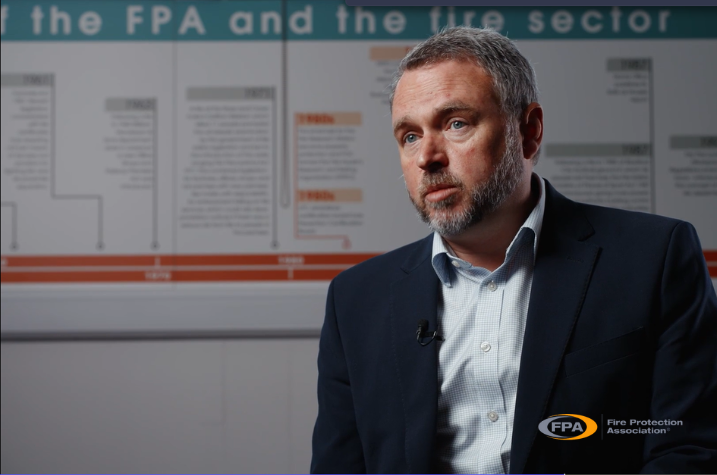
Gavin Dunn, Chief Executive of the UK Fire Protection Association (FPA)

Recent changes to building regulations have brought a much greater emphasis on fire safety across all types of buildings, but particularly for high-rise residential buildings. The sector is now taking a more risk-averse approach to material specification and system design, which means the products we choose, the way we use them, and the way we evidence their performance are under far greater scrutiny than ever before.
The Fire Protection Association (FPA) is a non-profit organisation, owned by the UK insurance industry and the National Fire Chiefs Council. Our sole purpose is to help industry, construction, and property owners reduce risks within their portfolios, both from fire and wider resilience issues. We see first-hand how changes in regulation, oversight, and market expectations are reshaping how the industry designs, builds, and maintains high-rise buildings.
New regulatory framework
The Building Safety Act, the creation of the Building Safety Regulator, and the requirement for the “golden thread” of information have fundamentally changed the regime for higher-risk residential buildings. These projects now follow a formal gateway process. Gateways 1,2 and 3 are essentially planning, construction and before occupation with regulator sign-off being required at each stage before the project can progress.
For those involved in design and specification, this means that products must have proven performance and are tested and certified to relevant standards for their intended use. It’s fundamental that any change such as using products differently from their original specification or in combination with other products that weren’t originally envisioned, the information is reported back to the design team who must then check that these products are still safe, appropriate and compliant. Additional checks such as engineering reviews or new fire tests are essential to confirm they remain safe and compliant. It might also need regulator sign off as well.
The shift to non-combustible materials
Following Grenfell Tower and other fires internationally, the specification of combustible materials, particularly in facade systems, has come under intense scrutiny. There has been a significant shift in market expectations, with insurers, investors, and end users showing a strong preference for non-combustible materials in high-rise buildings.
This change is about more than just meeting regulatory requirements. It is also about reducing reputational risk, protecting public trust, and ensuring the long-term safety of buildings. Non-combustible materials offer the most straightforward route to achieving these goals, giving greater confidence in both compliance and performance.
Testing, verification, and installation
As an industry, we must move beyond simply selecting compliant products. Correct usage and installation are equally critical. Too often, the right products are specified but installed incorrectly, and the data shows that poor installation is currently our biggest failure point.
That is why additional verification steps are so important. Increasingly, products are being tested not just for certification, but for wider or combined uses. This data provides fire engineers with the evidence they need to make sound judgements. In parallel, inspection processes on site must confirm that products are installed exactly as intended.
The importance of the golden thread
The products chosen, how they are used and how they are installed must be documented as part of the golden thread of information. It becomes the single source of truth when it comes to a building. This provides a detailed and accessible record for future owners and operators, ensuring they have the knowledge needed to make safe, informed decisions about maintenance or alterations. Without this transparency, public confidence in building safety will remain fragile.
Looking ahead
The initial industry response to the new regulatory regime has been to specify non-combustible materials wherever possible, and this has been the right approach to rebuild trust. Over time, as testing regimes, certification processes, and regulatory oversight continue to strengthen, we may reach a point where certain combustible materials can be reintroduced in very controlled and well-evidenced ways.
Until then, prioritising proven, non-combustible systems remains the most risk-averse and publicly acceptable choice. Manufacturers such as IG Masonry Support play a vital role in this, providing A1-rated, fully tested solutions and the technical expertise to ensure they are specified and installed correctly.
The challenge now is to maintain our focus on what matters most: delivering buildings that perform in the way society needs them to perform. It is really important that we re-establish public trust and we build buildings that perform in the way society needs them to perform. That means creating buildings that are healthy, energy efficient and great places to live, while also giving people the peace of mind that they are safe and secure when things go wrong.

Related Posts

Request CPD Presentation
Gain your CPD points by requesting a Continuous Professional Development presentation on IG Masonry Support solutions.
Request CPD