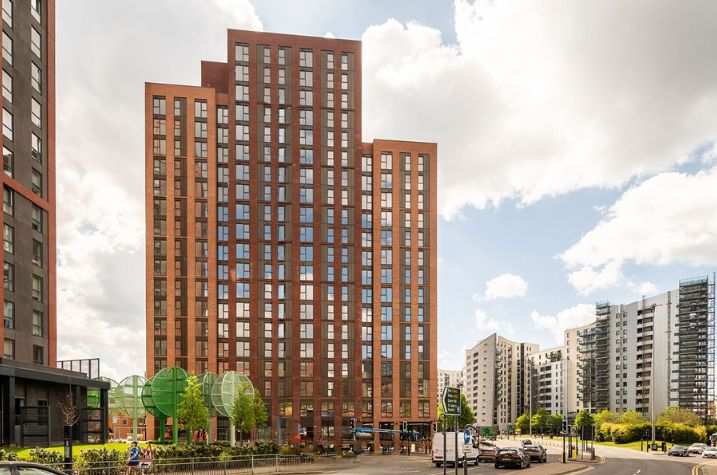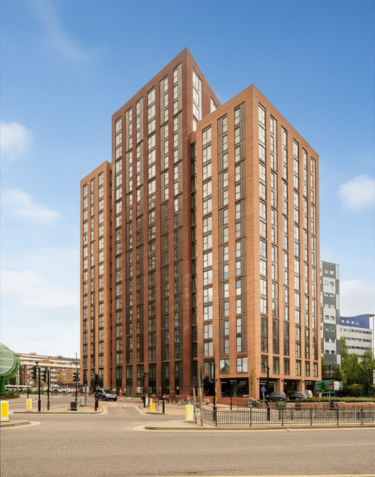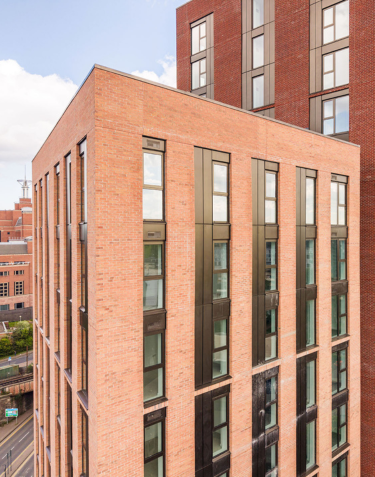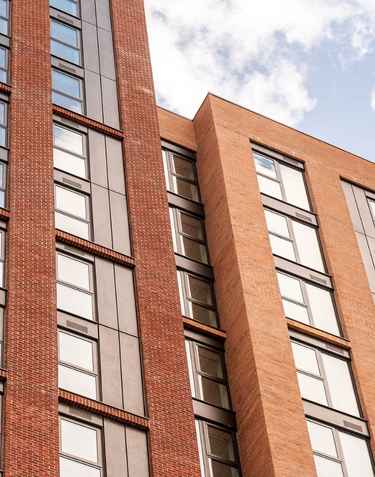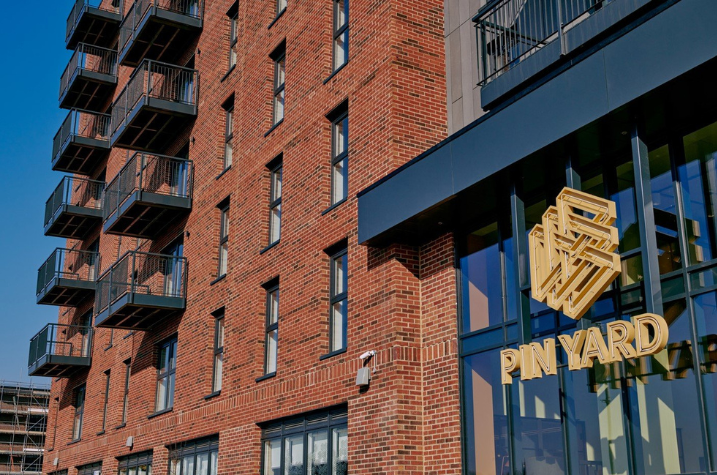
IG Masonry Support achieved soffit depth through a flexible masonry support strategy, combining our B.O.S.S. A1 (Brick on Soffit System) with our Welded Masonry Support. By setting these systems at varying offsets from the structure and, where required, extending them below slab level, we were able to create shadow lines, recessed areas, and layered brickwork, even within tight tolerances. This approach was further enhanced through the integration of brick soffits and façade interfaces, carefully coordinated with contrasting brick types to emphasise depth and reinforce the visual separation of the three building forms.
For the tight glazing areas, our design team developed a bespoke Brick Slip Lintel solution, allowing the lintel to wrap around and support brickwork from the sides rather than from above. This enabled structural performance to be maintained within very restricted heights while combining lintel and soffit functions into a single coordinated detail. In selected areas, masonry support was replaced with this bespoke lintel approach to simplify installation, reduce unnecessary movement joints, and improve efficiency.
At the acute-angled corners, we engineered bespoke masonry support solutions to accommodate the sharp V-shaped façade detail. Bracket positions were adjusted on the masonry support to manage increased cantilever loads, with higher-capacity fixings and additional supports introduced where required. Our in-house brick cutting service was used to manufacture special bricks for these corners, ensuring a precise, clean finish, while Cast-in Channel systems improved accuracy and installation efficiency by removing the need for drilling into structure.
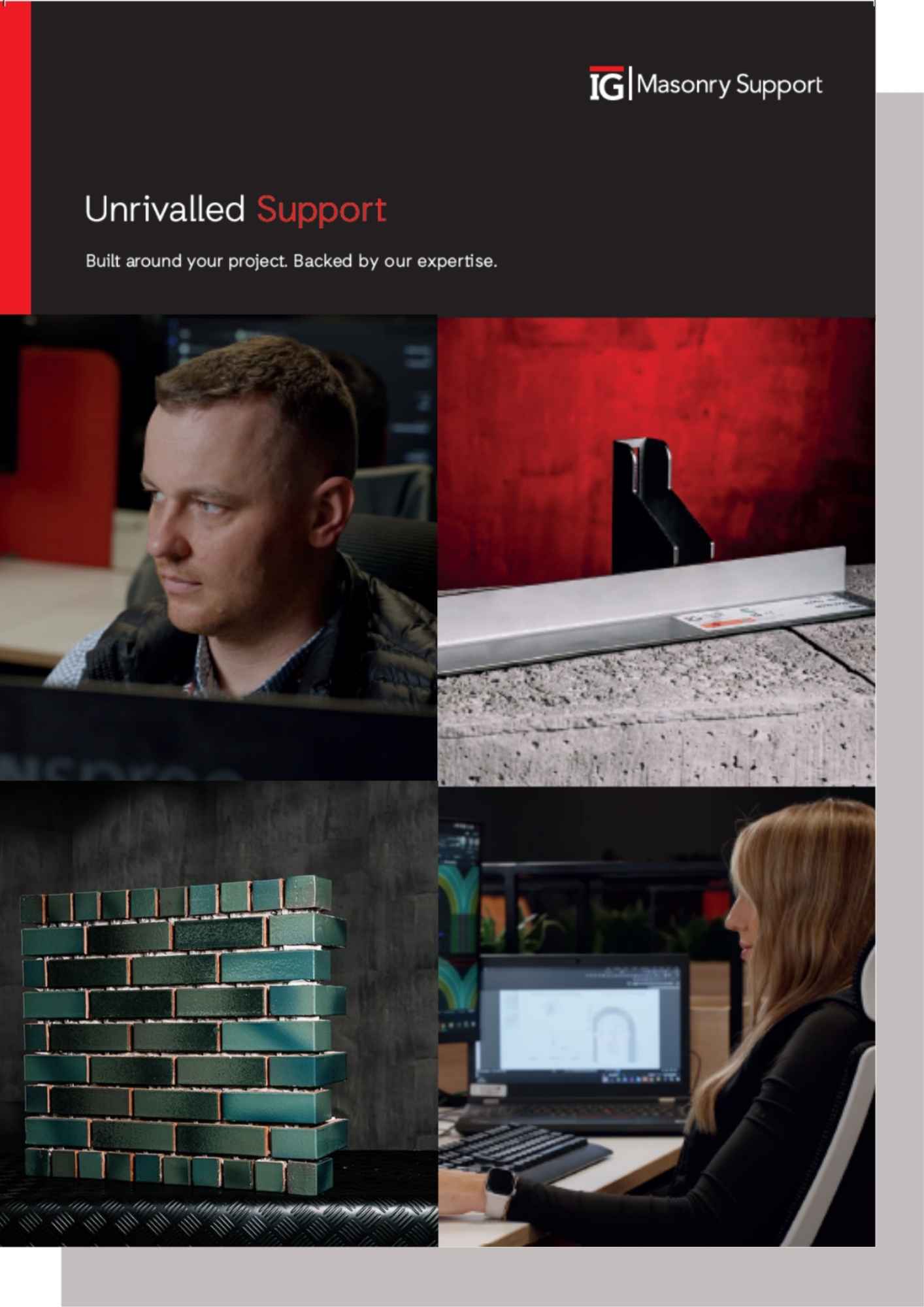
By coordinating all elements in-house, from engineering and detailing through to brick cutting and production, IG Masonry Support helped deliver consistency across the project while maintaining the ability to respond efficiently to design changes and evolving site conditions.